 MaharlikaNews | Canada’s Leading Online Filipino Newspaper – No. 1 Information Hub for Filipino-Canadians with 250K Visitors in 2020 MaharlikaNews is Canada’s premier online Filipino newspaper, delivering the latest news, stories, and updates for Filipino-Canadians. Stay informed and engaged.
Read this in The Manila Times digital edition.

“It wasn’t easy to shift careers, but I kept believing there was a bigger purpose for me.”
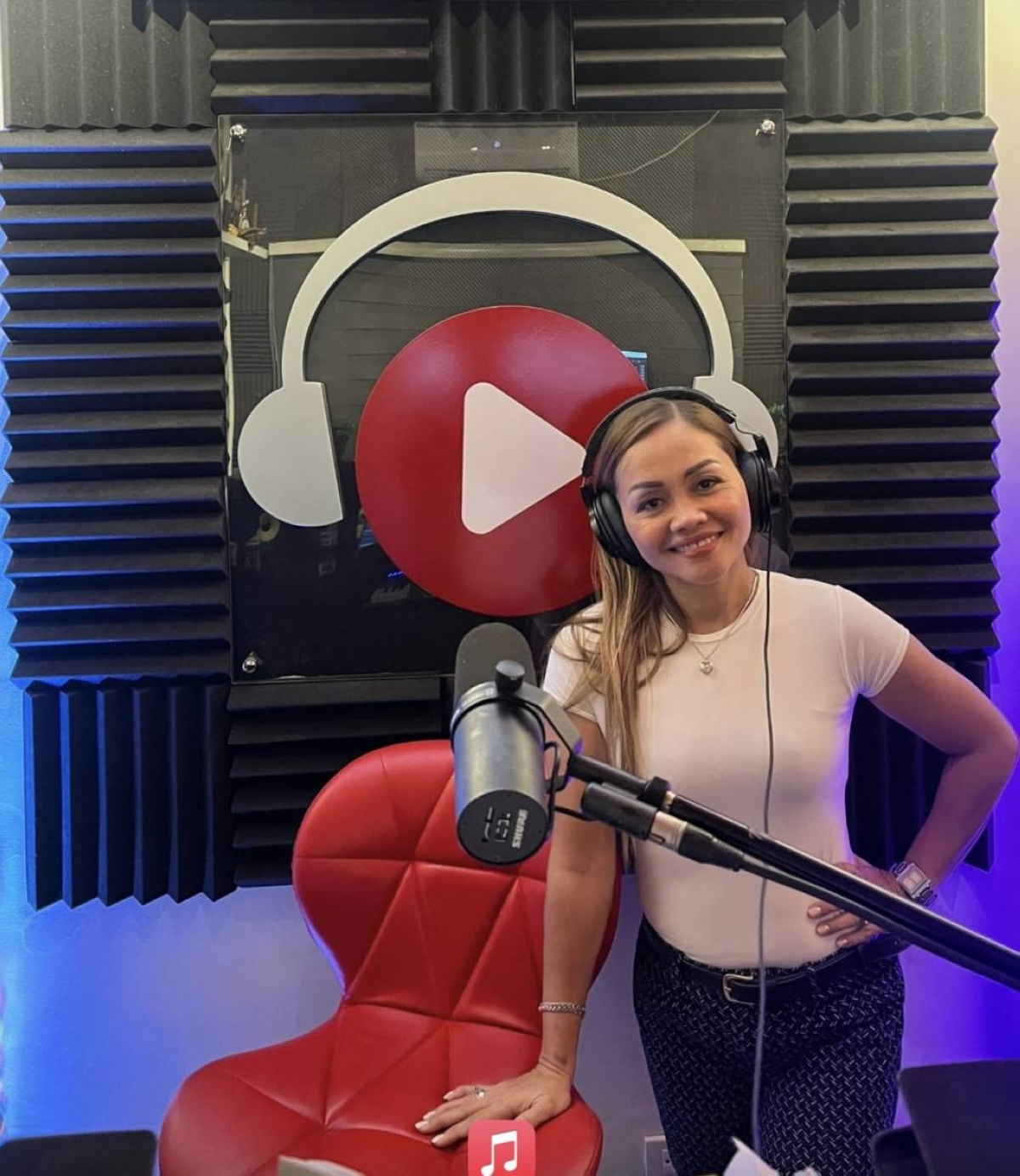
FOR years, Melinda Godinez-Panerio’s world was defined by the glare of stage lights and the rhythm of nightly sets in the resorts of Malaysia and Singapore.
As an overseas Filipino worker (OFW), her voice was her bread and butter, moving from one contract to another to provide for a family thousands of miles away.
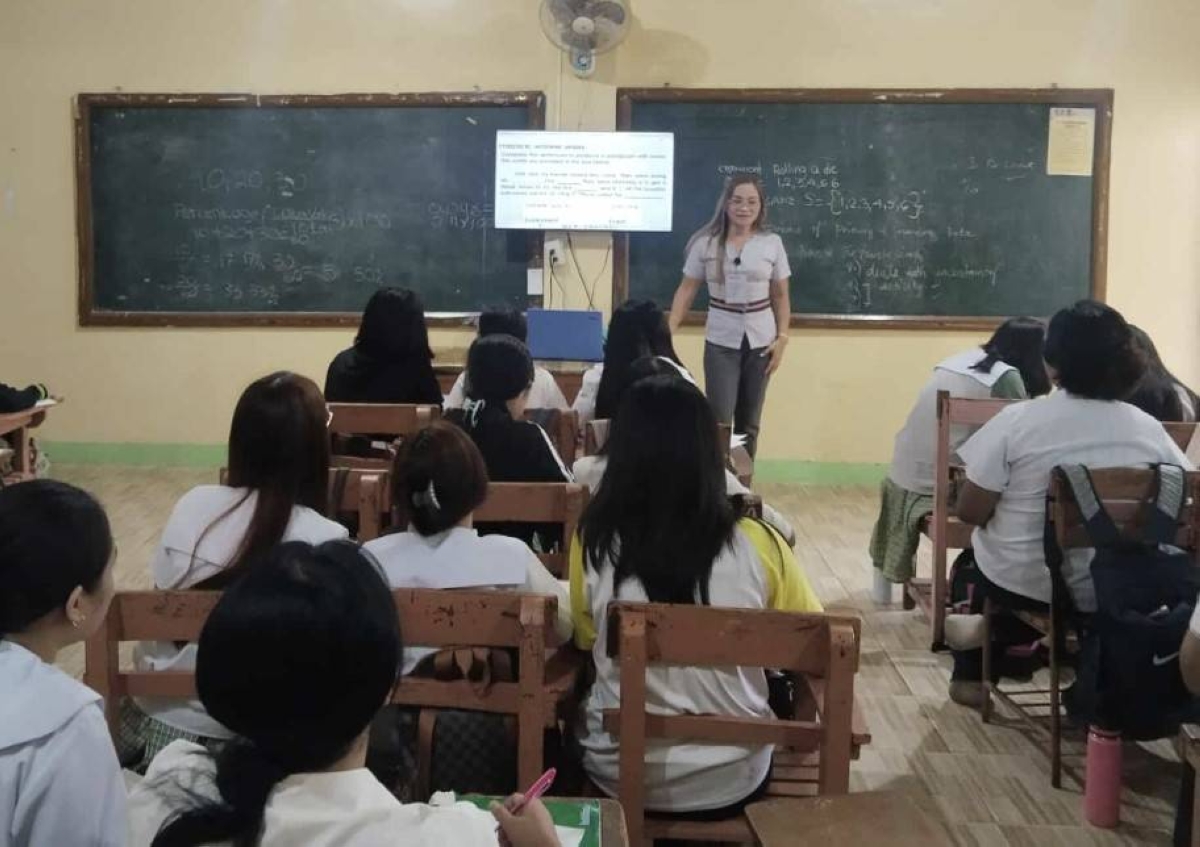
But at 46, Godinez-Panerio has traded her microphone for a chalkboard.
She is now a Grade 7 teacher at Bangkal National High School, a transition made possible through the “Sa Pinas, Ikaw ang Ma’am at Sir” (Spims) program.
“I told myself, I know I can’t be a singer forever,” Godinez-Panerio said. “Singing might be my bread and butter, but I finished a degree in education. I knew I could do more.”
The road back home
Spims is a flagship reintegration initiative implemented by the National Reintegration Center for OFWs under the Department of Migrant Workers (DMW). It specifically targets OFWs who are licensed teachers, helping them transition into permanent positions within the Philippine public school system.
For Godinez-Panerio, the journey back began in 2016 when she spotted the program’s details in an email. Despite holding an English degree from the University of Cebu, the shift was daunting. She was already in her 30s and had spent the bulk of her professional life in the entertainment industry rather than the academe.
“It wasn’t easy to shift careers, but I kept believing there was a bigger purpose for me,” she said.
The gamble paid off. Nearly a decade into her teaching career, Godinez-Panerio has become a model of professional growth. She has since earned a Doctor of Education in Development Education, along with master’s degrees in administration and supervision, and English teaching.
Pillar for reintegration
The program provides more than just a job placement; it offers a lifeline for families torn apart by migration. For Godinez-Panerio, stability meant finally staying close to her children as they navigated school and college. She even augmented her income by opening a small internet café and beauty salon in 2017.
According to DMW Supervising Labor and Employment Officer Luchel Senarlo Taniza, the program’s support is tangible. Once beneficiaries begin teaching, they receive instructional “kits” to ease their classroom transition. In Central Visayas alone, the DMW distributed P3.26 million worth of these kits to 163 beneficiaries last year, with each teacher receiving assistance valued at P20,000.
“The DMW really helps us a lot,” Godinez-Panerio said. “The financial assistance and the teaching kits have an impact. Even if I can provide for myself, the support from the government is inspiring.”
‘Living proof’
The success of educators like Godinez-Panerio serves as a vital signal to the thousands of Filipino teachers still working abroad in nonteaching roles or foreign classrooms. Current statistics show that between 1,500 and 2,000 teachers leave the Philippines annually, contributing to a “brain drain” that the government is eager to reverse.
By coordinating with the Department of Education (DepEd) and local government units, Spims ensures that the global expertise gained by OFWs is successfully integrated back into the local grassroots level.
Now an established academic, Godinez-Panerio considers herself “living proof” that the program works. Her advice to fellow OFWs still searching for a way home is rooted in her own unlikely encore.
“Trust the efforts being made for OFWs,” she said. “I never expected I would be one of the blessed beneficiaries of this program. But here I am.” PIA
***
‘SA PINAS, IKAW ANG MA’AM AT SIR’ BRINGS FILIPINO TEACHERS HOME
FOR thousands of Filipino teachers, the “greener pastures” of North America, the Middle East and Southeast Asia have long been a primary destination. However, a specialized reintegration program is now working to ensure that the journey back to a Philippine classroom is as seamless as the departure.
The Sa Pinas, Ikaw ang Ma’am at Sir (Spims) program, a collaborative initiative led by the Department of Labor and Employment (DOLE) and the Department of Education (DepEd), is designed to encourage overseas Filipino workers (OFWs) who are passers of the Licensure Examination for Teachers (LET) to return to the Philippines to practice their profession.
EXODUS OF EDUCATORS
The urgency of the Spims program is underscored by a stark reality: the Philippines remains one of the world’s largest exporters of educational talent. Data from the Philippine Statistics Authority and the Commission on Filipinos Overseas indicate that “Professional, Technical and Related Workers” — a category that includes educators — make up a significant portion of the millions of OFWs deployed annually.
In the last decade, an average of 1,500 to 2,000 teachers leave the country every year to work in schools in the United States, Thailand and Vietnam, often cited for significantly higher pay scales and better benefits. This “brain drain” creates a critical vacuum in the Philippine public school system, particularly in specialized subjects like Mathematics and Science.
BRIDGE TO REINTEGRATION
Since its inception, Spims has sought to mitigate this drain by offering Teacher I positions to returning OFWs, bypassing the often-tedious regular hiring queue. To qualify, returning teachers must have passed the LET and have accumulated at least two years of teaching experience, or have undergone a refresher course if they have been out of the classroom for more than five years.
The program doesn’t just offer a job; it provides a “starter kit” for reintegration. Successful applicants receive teaching kits worth approximately P20,000, which include a tablet or laptop, stationery and other instructional materials to help them hit the ground running.
“The goal is to show our teachers that they are valued here,” a DOLE representative stated. “We aren’t just giving them a livelihood; we are giving them back their dignity as professionals in their own land.”
MEASURING SUCCESS
To date, the Spims program has successfully reintegrated over 3,000 teachers into the national school system. These “Ma’ams” and “Sirs” bring with them a global perspective, having navigated diverse educational environments abroad.
However, challenges remain. While the program offers a steady government salary and benefits, it still struggles to compete with the high wages offered by international recruiters.
Policymakers are now looking at enhancing the Spims package to include better housing loan options and professional development grants.
As the Philippines continues to refine its migration policies, the Spims program serves as a template for “brain gain” strategies. It proves that with the right institutional support, the trend of migration can be reversed — transforming temporary workers back into permanent pillars of the Philippine education system.
*****
Credit belongs to : www.manilatimes.net/


